

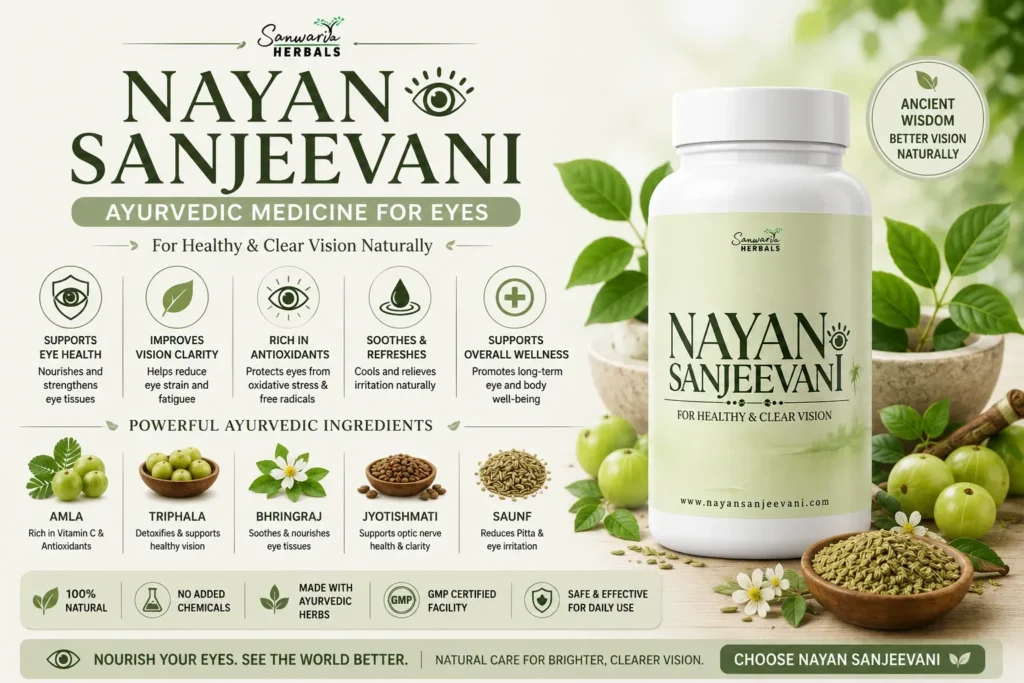
Our eyes work harder today than at any point in history. Between screens, pollution, poor sleep, and processed diets, it’s no surprise that more people are searching for gentler, time-tested ways to protect their vision. This is where ayurvedic medicine for eyes comes in — a 5,000-year-old system of natural healing that treats eye health as part of the body’s overall balance, not an isolated organ to be patched up.
In this complete guide, we’ll explore how Ayurveda approaches vision wellness, the herbs and formulations behind an effective herbal eye health supplement, how to choose the best ayurvedic supplement for eyes, and why an ayurvedic powder for eye health is often considered the most traditional and potent delivery method.
What Is Ayurvedic Medicine for Eyes?
Ayurvedic medicine for eyes is a branch of traditional Indian medicine (Ayurveda) dedicated to Netra Roga Chikitsa — the science of eye care. Ancient Ayurvedic texts like the Sushruta Samhita describe detailed anatomy of the eye and outline herbal treatments, dietary guidance, and cleansing therapies to maintain visual health well into old age.
Unlike conventional approaches that often focus only on symptoms, ayurvedic medicine for eyes looks at the doshas — Vata, Pitta, and Kapha — believing that an imbalance in these energies contributes to eye strain, dryness, and age-related vision decline. By restoring this balance through herbs, diet, and lifestyle practices, Ayurveda aims to support the eyes from the inside out.
Why People Are Turning to Ayurvedic Eye Care Today
Several modern lifestyle factors have brought renewed interest in natural eye care:
- Increased screen time from phones, laptops, and TVs causing digital eye strain
- Nutrient-poor diets lacking antioxidants essential for retinal health
- Environmental pollution and UV exposure accelerating oxidative stress
- Aging population looking for gentle, long-term support rather than only pharmaceutical intervention
This growing demand has fueled interest in a reliable ayurvedic eye supplement that combines traditional herbal wisdom with modern, standardized formulations.
Key Herbs Used in Ayurvedic Medicine for Eyes
A quality herbal eye health supplement typically draws from a core group of time-tested botanicals. Here are the most widely used:
1. Triphala
A blend of three fruits — Amalaki, Bibhitaki, and Haritaki — Triphala is considered the cornerstone of Ayurvedic eye care. It’s traditionally used both orally and as Triphala Ghrita (eye wash) to cleanse and nourish the eyes.
2. Amla (Indian Gooseberry)
Amla is exceptionally rich in natural vitamin C and antioxidants, traditionally valued for supporting the eyes’ collagen structure and combating oxidative stress.
3. Bhringraj
Often associated with hair health, Bhringraj is also traditionally used in Ayurvedic eye formulations for its cooling and soothing properties.
4. Jyotishmati (Malkangni)
Known in Ayurvedic tradition as a “medhya” (brain and nerve-supporting) herb, Jyotishmati is believed to support the optic nerve and overall visual clarity.
5. Saunf (Fennel)
Fennel seeds have long been used in Ayurvedic households, often soaked overnight and consumed to support eye comfort and reduce Pitta-related irritation.
6. Ghee (Clarified Butter)
Used both internally and in Netra Basti (a therapy where warm ghee is pooled around the eyes), ghee is considered deeply nourishing for the eye tissues in Ayurveda.
Ayurvedic Powder for Eye Health: The Traditional Format
Among the various delivery formats, ayurvedic powder for eye health — known as churna — remains one of the most traditional and trusted forms. Powders are typically made by grinding dried herbs like Triphala, Amla, and Bhringraj into a fine consistency that can be mixed with warm water, honey, or ghee.
Why powders are still preferred by many:
- Easier for the body to absorb compared to some processed tablets
- No synthetic binders or fillers
- Dosage can be adjusted gradually
- Aligns with classical Ayurvedic preparation methods described in ancient texts
If you’re exploring an ayurvedic powder for eye health, look for products that specify the exact herb ratios and are free from artificial preservatives.
How to Choose the Best Ayurvedic Supplement for Eyes
With so many products on the market, finding the best ayurvedic supplement for eyes can feel overwhelming. Here’s a simple checklist to guide your decision:
- Check the ingredient list – Look for classical herbs like Triphala, Amla, and Jyotishmati rather than vague “proprietary blends.”
- Look for standardization – A trustworthy ayurvedic eye supplement should mention extraction methods or standardized herb ratios.
- Verify third-party testing – Reputable brands test for heavy metals and contaminants, a known concern in some herbal products.
- Read the manufacturing certification – GMP-certified facilities and AYUSH (Ministry of AYUSH, India) approval add credibility.
- Avoid unrealistic claims – Be cautious of products promising to “cure” conditions like glaucoma or cataracts; Ayurveda is best positioned as supportive care, not a replacement for medical treatment.
Ayurvedic Lifestyle Practices for Eye Wellness
Herbs and supplements are only one part of the picture. Ayurveda emphasizes daily habits (Dinacharya) that complement any ayurvedic medicine for eyes:
- Trataka (candle gazing) – A traditional eye-focusing exercise believed to strengthen eye muscles and improve concentration
- Splashing eyes with cool water each morning to reduce Pitta-related heat
- Palming exercises – Gently cupping warmed palms over closed eyes to relax eye muscles
- Balanced diet rich in leafy greens, carrots, and ghee, aligned with Ayurvedic nutrition principles
- Adequate sleep since Ayurveda considers rest essential for Pitta dosha balance, which governs the eyes
Common Eye Concerns Addressed Through Ayurveda
| Concern | Ayurvedic Approach |
|---|---|
| Digital eye strain | Trataka practice, cooling herbs like fennel |
| Dryness | Ghee-based therapies, Netra Basti |
| Age-related vision decline | Triphala, Amla-based formulations |
| Poor night vision | Traditional herbs rich in antioxidants |
| General eye fatigue | Palming, adequate rest, herbal powders |
Note: These represent traditional Ayurvedic approaches. Anyone experiencing persistent or worsening eye symptoms should consult an ophthalmologist promptly, as some conditions require timely medical diagnosis and treatment.
Ayurvedic Medicine for Eyes vs. Conventional Eye Care
| Aspect | Ayurvedic Approach | Conventional Approach |
|---|---|---|
| Focus | Root-cause balance (doshas) | Symptom and condition management |
| Formulation | Herbal powders, oils, ghee-based | Synthetic drops, medications |
| Timeline | Gradual, long-term support | Often faster symptom relief |
| Best used for | General wellness, prevention | Diagnosed conditions, emergencies |
The two approaches aren’t mutually exclusive. Many people use a herbal eye health supplement alongside regular eye check-ups for a well-rounded approach to vision care.
How to Incorporate an Ayurvedic Eye Supplement Into Your Routine
- Start with a professional consultation — Ideally with an Ayurvedic practitioner who can assess your dosha type.
- Take supplements consistently — Ayurvedic remedies generally work gradually, often over weeks to months.
- Pair with lifestyle changes — Reduce screen time, follow the 20-20-20 rule (every 20 minutes, look at something 20 feet away for 20 seconds).
- Track your progress — Note any changes in eye comfort, dryness, or fatigue.
- Don’t skip regular eye exams — Ayurveda works best as a complementary, not a replacement, approach.
Safety Considerations
While generally well-tolerated, natural doesn’t always mean risk-free. Keep these points in mind:
- Consult a doctor before starting any ayurvedic eye supplement if you’re pregnant, nursing, or on prescription medication
- Purchase only from reputable, tested brands to avoid contamination risks
- Discontinue use and consult a physician if you notice irritation or allergic reaction
- Ayurvedic remedies should not replace prescribed treatment for diagnosed eye diseases like glaucoma, cataracts, or macular degeneration
Frequently Asked Questions
1. Is ayurvedic medicine for eyes scientifically proven? Some individual herbs used in Ayurvedic eye formulations, such as Amla, have documented antioxidant properties studied in modern research. However, many traditional formulations haven’t undergone large-scale clinical trials, so they’re best considered complementary support rather than a replacement for evidence-based medical treatment.
2. How long does it take for an ayurvedic eye supplement to show results? Ayurvedic remedies typically work gradually. Most practitioners suggest consistent use for 8–12 weeks before evaluating noticeable changes.
3. Can ayurvedic powder for eye health be used by children? Some gentle formulations may be suitable, but pediatric dosing should always be guided by a qualified Ayurvedic practitioner or pediatrician.
4. What is the best ayurvedic supplement for eyes for screen-related strain? Formulations containing Triphala, Amla, and cooling herbs like fennel are traditionally favored for digital eye strain, alongside lifestyle changes like reduced screen exposure.
5. Are there side effects of ayurvedic eye supplements? Most are well-tolerated in recommended doses, but quality matters. Poor-quality products carry contamination risks, so always choose tested, certified brands.
Conclusion
Ayurvedic medicine for eyes offers a holistic, time-tested path to supporting long-term vision wellness — but it works best as part of a broader routine that includes a balanced diet, healthy screen habits, and regular professional eye care. Whether you choose a herbal eye health supplement, an ayurvedic powder for eye health, or simply want to explore the best ayurvedic supplement for eyes for your needs, the key is consistency, quality sourcing, and realistic expectations.
This article is for informational purposes only and is not a substitute for professional medical advice. Always consult a qualified healthcare provider before starting any new supplement, especially if you have an existing eye condition.